French Drain vs. Dry Well: Which Does Your Property Need?
Standing water in the yard, a wet basement, or soggy ground that never seems to dry out — drainage problems are among the most common issues we're called out for across Northern Colorado. Two solutions come up again and again: the French drain and the dry well. They're often confused, but they solve different problems.
What Is a French Drain?
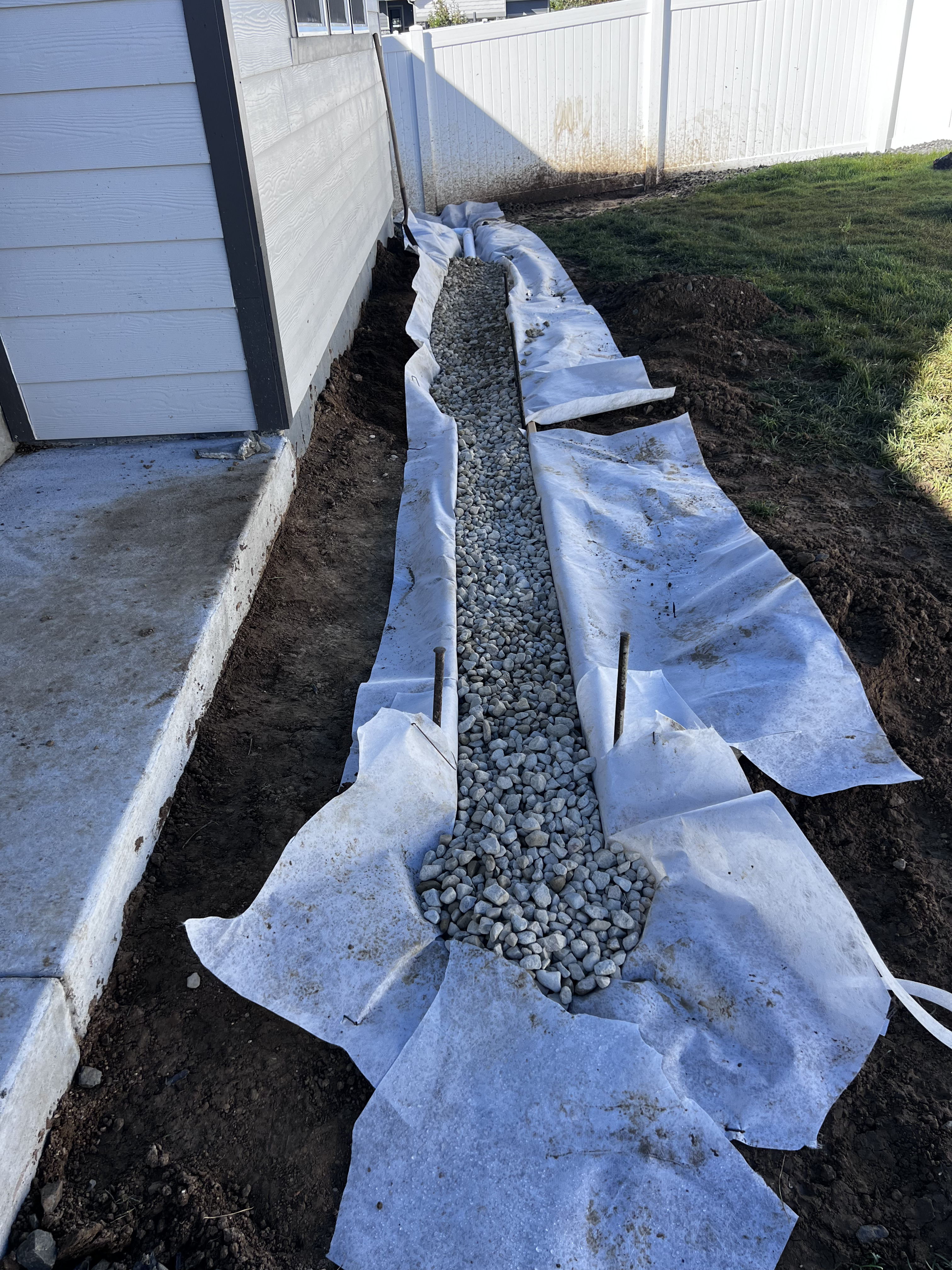
A French drain is a gravel-filled trench with a perforated pipe at the bottom that collects and redirects water away from a problem area. Water enters along the length of the drain and flows by gravity to a safe outlet — a ditch, a storm drain, or a lower part of the property.
Use a French drain when you need to move water from point A to point B: intercepting runoff before it reaches your foundation, drying out a chronically wet section of yard, or relieving hydrostatic pressure around a basement.
What Is a Dry Well?
A dry well is an underground pit or perforated tank filled with gravel (or a manufactured chamber) that collects and stores water, letting it slowly soak into the surrounding soil. Instead of moving water somewhere else, it holds it and lets the ground absorb it over time.
Use a dry well when you have nowhere to drain to— a flat lot with no lower outlet, or when you're managing a concentrated source like downspouts or sump pump discharge.
Side-by-Side Comparison
| Factor | French Drain | Dry Well |
|---|---|---|
| Purpose | Redirects water away | Stores & absorbs water |
| Best for | Sloped lots with an outlet | Flat lots, no outlet |
| Handles | Broad, spread-out water | Concentrated sources |
| Needs slope | Yes | No |
Which One Is Right for Northern Colorado?
It depends entirely on your lot. Many foothill properties around Loveland and the mountain areas have slope to work with, which makes a French drain the natural choice. Flatter lots on the plains near Greeley or Windsor sometimes lack an outlet, making a dry well — or a combination of both — the better solution. The only way to know for sure is to look at how water actually moves across your property.
The wrong drainage solution is worse than none at all — it moves the problem instead of solving it. A proper assessment of your grade, soil, and water source is the first step to fixing standing water for good.
Water Problems on Your Property?
We'll Fix It Right the First Time
We design and install French drains and drainage solutions across Loveland, Fort Collins, Greeley, Red Feather Lakes, and all of Northern Colorado. Free on-site assessment.
Related Reading